
Soil Microbiology
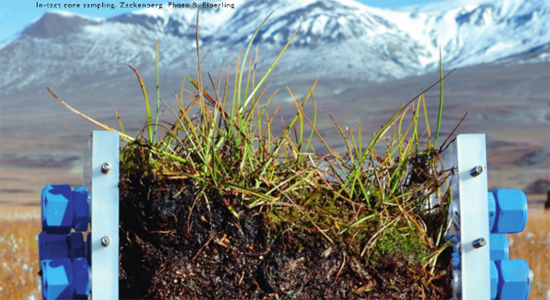
Bacteria and fungi in soils have a profound impact on plant productivity as well as emission of carbon dioxide and other greenhouse gases to the atmosphere.
Our research focusses on globally important soil systems, mainly agricultural soils in temperate regions, Arctic soils, and soils in deserts and other drylands. We combine DNA- and RNA-based techniques to unravel the activity and diversity of soil microorganisms with measurements of microbial production and consumption of volatile organic compounds and greenhouse gases. This enables us to better understand the responses of soil microbiomes and their activity to climate change and their importance for future plant productivity. Among current projects, we investigate how nitrous oxide emissions from agricultural soils may be lowered, how microorganisms may be involved in stabilization of organic matter in soils, and how climate affects the microbiomes of soils and roots.
- Volt Center
At Center for Volatile Interactions, a Center of Excellence financed by the Danish National Research Foundation, we use state-of-the-art analytical instrumentation and molecular tools to unravel the importance of production and consumption of volatile organic compounds by microorganisms in soils, on roots and on leaves. - The BIOCUE (Microbial biodiversity and Carbon Use Efficiency as NBS for soil C stabilization and BIOCUE – Biodiversa +)
The project explores how Nature-based solutions — such as efforts to protect, restore, and preserve ecosystems—affect the carbon balance in soil, whether it’s gained or lost. The project focuses on how these efforts influence the diversity and role of microbes in soil carbon stabilization, particularly their Carbon Use Efficiency (CUE), which refers to how effectively microbes use the carbon they take in for growth instead of respiring the carbon as CO2. - amoA
The overarching goal of the Impact evaluation framework for nitrification inhibitors - the amoA project is to create an Impact Evaluation Framework for the use of nitrification inhibitors (NIs) to significantly reduce agricultural N2O emissions. Previous studies have found that emissions of this potent greenhouse gas after fertilizer addition are significantly reduced when NI is supplemented to the field. Danish calculations estimate that the use of NIs can reduce N2O emissions by more than 500,000 tons CO2 equivalents per year. -
EMBARQ
The main ambition of the EMBARQ project is to provide a knowledge base and develop innovative tools for quantifying the impact of adding microorganisms to soil e.g. for enhancement of crop growth, facilitating rapid assessment methods for industry and regulators. The project proposes four novel aspects for risk assessment: tracking microorganisms in the environment, calibrating risks against natural fluctuations, integrating AI tools for risk assessment, and considering a OneHealth perspective
2026
2025
- Salinas-García, M. Á., Fernbach, J., Rinnan, R. & Priemé, A. Extreme smells—microbial production of volatile organic compounds at the limits of life. FEMS Microbiol Rev 49, fuaf004 (2025).
- , , , . Arctic Soil C and N Cycling Are Linked With Microbial Adaptations During Drought. Global Change Biology 31, no. 9: e70502 (2025).
A project may include:
- Sequencing of PCR amplicons and metagenomes (only MSc)
- Metatranscriptomics (only MSc)
- qPCR
- Measurements of production and consumption of greenhouse gases
- Measurements of production and consumption of volatile organic compounds
- Advanced biostatical analyses of data based on DNA/cDNA sequences (only MSc) and/or volatile organic compounds.
Supervisor: Anders Priemé, aprieme@bio.ku.dk
All organisms on our planet produce a wide range of volatile compounds to communicate, cooperate, and compete. These complex, yet invisible, interactions are not only essential to the organisms, but also have profound effects on global climate. While the processes exchanging the main greenhouse gases are well studied, we have a poor understanding of the biological processes releasing or consuming volatile compounds.
A Cross-Disciplinary Center for Volatile Interactions
Center for Volatile Interactions is a Center of Excellence combining expertise in plant ecology, microbiology, plant/moss-microorganism interactions, marine biology and computer modelling with state-of-the-art instrumentation for analyses of volatile compounds, molecular analyses of microbial community structure and activity, as well as plant growth facilities. Our main ambition is to achieve an overall understanding of the biotic and abiotic parameters controlling the production and consumption of volatile compounds in different environments and how these compounds influence the life of other organisms. We believe that this will lead to a fundamental understanding of how key interactions between organisms and their environment affect the atmospheric burden of volatiles under current and future climates.
MSc Research Opportunities at VOLT
As an MSc student at VOLT, you will be involved in one of the many on-going projects within our center. The specific project depends on your interests and may include quantification of fluxes of volatile compounds from ecosystems, plants and/or microorganisms; quantification of volatile consumption by microorganisms; experiments unravelling how volatile compounds affect plants and microorganisms across species; and modeling of the biological processes involved in the production and consumption of volatile compounds.
Hands-On Experience and Methodologies
You may gain hands-on experience with experiments involving plants/mosses, microorganisms, soils, marine systems and insight into the effects of climate change on ecosystem-volatile-atmosphere interactions. Methodologies may include PTR-ToF-MS and GC-MS to analyse volatiles, DNA- and RNA-based techniques like metagenomics and metatranscriptomics to study complex microbial communities, and advanced tools for data analyses and ecosystem modelling. Fieldwork in Northern Scandinavia and Greenland may be possible at specific projects.
Keywords: Biodiversity, climate change, bacterial activity
Supervisor: Anders Priemé, aprieme@bio.ku.dk
 Group leader
Group members
| Name | Title | Phone | |
|---|---|---|---|
| Anders Priemé | Professor | +4535330147 | |
| Jonas Michael Fernbach | Postdoc | +4535329518 | |
| Miguel Angel Salinas García | Postdoc | +4535324746 |