
Microbiomics Lab
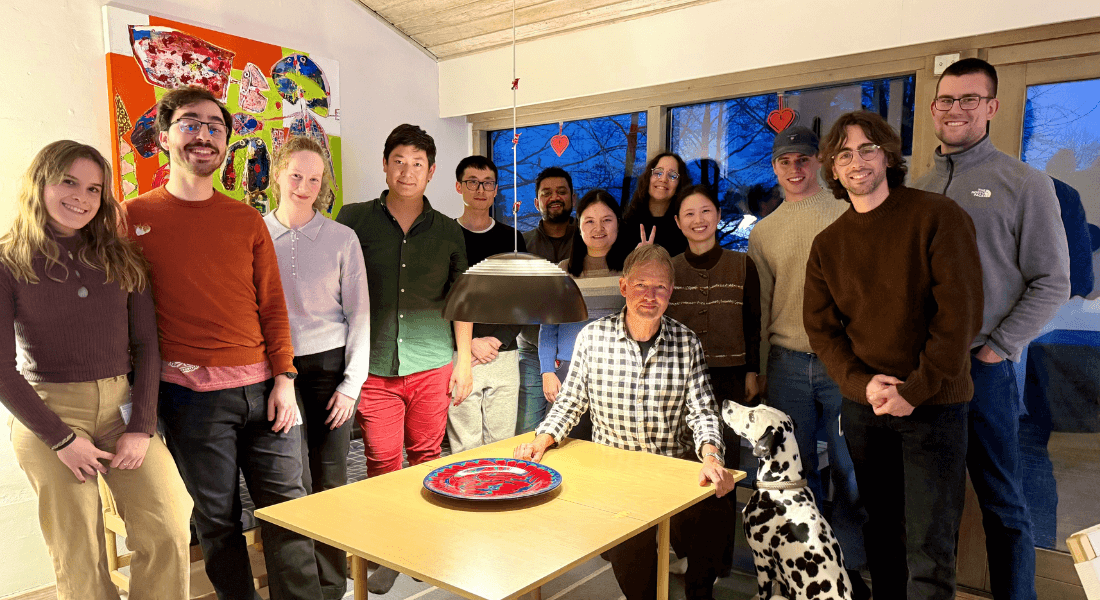
Social Evolution and Microbial Ecology
In the Microbiomics Lab, we investigate the fundamental principles governing microbial evolution and ecology. A particular focus is on horizontal gene transfer (HGT) and the production of “common goods,” such as signaling molecules and enzymes, which are essential for microbial interactions. These processes are critical for understanding microbial behavior and have transformative potential for applications like antibiotic development and sustainable agriculture.
At the Microbiomics Lab, our interdisciplinary and innovative approach pushes the boundaries of microbiological research, offering insights that pave the way for scientific breakthroughs and practical solutions to global challenges. Join us in exploring the hidden world of microbes and their extraordinary potential.
Microbiome Assembly and Function
The group uses advanced molecular techniques to study microbiome assembly and functionality across diverse ecosystems. From longitudinal studies on human gut microbiomes and their links to health outcomes like asthma to investigating root-associated microbial communities in plants, we strive to understand the interplay between microorganisms and their environments. We are also pioneering efforts to design “collaboromes”, synthetic microbial consortia tailored for specific functions.
Antibiotic Resistance and Genetic Adaptation
A cornerstone of our research explores the role of mobile genetic elements, such as plasmids, in facilitating HGT and antibiotic resistance. By decoding genetic exchange networks within microbial communities, we aim to uncover how these mechanisms sustain cooperation and drive bacterial adaptability. This work is crucial for tackling antibiotic resistance and understanding the stability of beneficial microbiomes.
Evaluating Microbiome Based Applications for Risk Quantification (EMBARQ)
Novo Nordisk Foundation Challenge Programme 2024 – Integrating safety and environmental sustainability impacts of bio-based solutions
EMBARQ addresses the need for improved risk assessment of novel biological agents used in agriculture and environmental management. These include live microbes – such as biofertilizers, biopesticides, and bioremediation agents – that promote sustainability by reducing reliance on chemical inputs.
Our vision is to develop complementary and integrative safety and environmental impact evaluation methods in a One Health perspective through an interdisciplinary approach, connecting biotechnology, risk assessment, and environmental science.
Project period: 2024–2030
Exploring the ROOT-MOBILOME: Horizontal Gene Transfer and Plasmid Dynamics in the Rhizosphere
Novo Nordisk Foundation – Plant Science, Agriculture and Food Biotechnology 2023
The project seeks to unravel plasmid dynamics within the root microbiome to enhance crop productivity and sustainability. By understanding how plasmids transfer beneficial traits among soil bacteria, it aims to enable targeted manipulation of root microbiomes for improved agriculture and reduced antimicrobial resistance risk.
Project period: 2024–2027
A collaborative investigation on gut-brain interactions in childhood
Novo Nordisk Foundation – Tandem grant 2022
This collaborative project leverages the COPSAC2010 birth cohort with its vast microbiota material and longitudinal clinical phenotyping, including a large neuropsychiatric assessment and brain imaging study in 700 Danish children at 10 years of age.
We are analyzing both the early and current gut microbiome and microbial products related to mental health and brain scans at age 10 years, as well as general neurodevelopment throughout childhood.
Project period: 2022–2026
Machine learning methods for data-driven discovery of antibiotic resistance plasmid dissemination and evolution
Novo Nordisk Foundation – Data Science Collaborative Research Programme 2020
The catastrophic spread of antibiotic resistance in disease-causing bacteria is mediated primarily through plasmids. Most antibiotic research has focused on clinical hosts, overlooking the role of the environment and non-clinical hosts as reservoirs for transmitting antibiotic resistance between clinically relevant bacterial strains, environmental bacteria, or other pathogens.
This collaboration combines expertise in big data analysis, computational metagenomics, plasmid biology, and horizontal gene transfer biology to create a unique research, learning, and training initiative centred in Copenhagen. The partners will uncover previously unrecognised plasmids responsible for antibiotic resistance transmission across a wide range of environments using novel machine learning-based tools.
The collaboration will construct a publicly available curated plasmid database. This database will be used to train machine learning tools and enable an open platform for data-driven discovery of plasmid sequence clusters.
Project period: 2021–2026
SOCIAL NETWORKING IN THE GUT MICROBIOME
Independent Research Fund Denmark
The human gut is home to trillions of microbes that play an important role in health and disease. It is a complex ecosystem where hundreds of microbial species coexist, partly due to extensive networks of cooperative and competitive interactions.
In this project, we experimentally investigate the importance of microbial interactions as determinants of human gut microbiome assembly and composition. We test new ecological concepts and theories to understand unique microbiome characteristics such as syntrophy and metabolic plasticity.
A novel experimental platform combining high-throughput in vitro screenings and in situ analyses in murine model systems is being developed. This will facilitate future studies on microbiome-host interactions and enable novel applications and improved treatments targeting interacting microbial networks rather than individual species.
Project period: 2022–2026
UNDERGROUND NETWORKING – Bacterial Interactions in the Plant Root Microbiome (UNICOM)
Independent Research Fund Denmark
Complex microbial communities colonize all higher organisms, many of which depend on the activity of microbes in their proximity – their microbiomes.
Based on the overarching hypothesis that social interactions between microbes are crucial for community formation and function, this project examines the ecological and evolutionary role of microbe-microbe interactions in assembling and maturing the plant root microbiome.
Using cutting-edge genomics, transcriptomics, integrated fine-scale sampling, and microscale bioimaging, the project aims to decipher causality in microbiome assembly. This understanding is instrumental for the rational design of second-generation multispecies agricultural probiotics to improve yield stability under changing environmental conditions.
Project period: 2022–2026
Copenhagen DNA Analysis Center (CoDon)
Novo Nordisk Foundation – Research Infrastructure – Large equipment and facilities 2020
The centrally located Center for DNA Analysis (CDA) provides access to new discoveries, research methodologies, and applications derived from long-read sequencing (LRS) for biomedical, clinical, biotechnological, and natural science research and development in the Copenhagen area.
The center ensures that non-specialists can explore new research avenues without requiring advanced laboratory or analytical infrastructure. CDA aims to serve as a unique enabling hub for cross-disciplinary research and development in Denmark.
Project period: 2021-2025
Microbiome in healthy and sick children
We investigate microbiome structure, diversity and activities of samples from healthy and sick children and animal model systems in order to identify the microbial factor in important illnesses such as asthma and diarrhea and others.
Techniques covered:
Classic culturing
Profiling of antibiotic resistance
PCR and qPCR analysis
Metagenomics sequencing
Bioinformatic analysis
Keywords: Microbiomes, human health, network analysis
Supervisor(s): Søren J. Sørensen
Email: sjs@bio.ku.dk
At the Microbiomics Lab, our interdisciplinary and innovative approach pushes the boundaries of microbiological research, offering insights that pave the way for scientific breakthroughs and practical solutions to global challenges. Join us in exploring the hidden world of microbes and their extraordinary potential.

Group members
| Name | Title | Phone | |
|---|---|---|---|
| Bryan S Wang | Postdoc | +4535329630 | |
| Elisabeth Chantal Sams-Dodd | PhD Student | +4535323925 | |
| Haotian Zheng | PhD Student | +4535324106 | |
| Huijuan Li | PhD Student | ||
| Iva Kovacic | PhD Fellow | +4535329392 | |
| Johanna Marie E Ettingshausen | PhD Fellow | ||
| Ke Tao | Postdoc | +4535329815 | |
| Lili Yang | PhD Fellow | +4535336278 | |
| Malthe Sebastian Puro | PhD Fellow | +4535323177 | |
| Nan Yang | Postdoc | ||
| Neethu Changanedassery Sainjan | Postdoc | +4535327550 | |
| Pau Piera Líndez | Postdoc | ||
| Søren Johannes Sørensen | Professor | +4551827007 | |
| Tanvi Taparia | Assistant Professor | +4535324299 | |
| Urvish Trivedi | Associate Professor | +4535331933 | |
| Wanli He | Postdoc |