
Computational and RNA Biology
Research
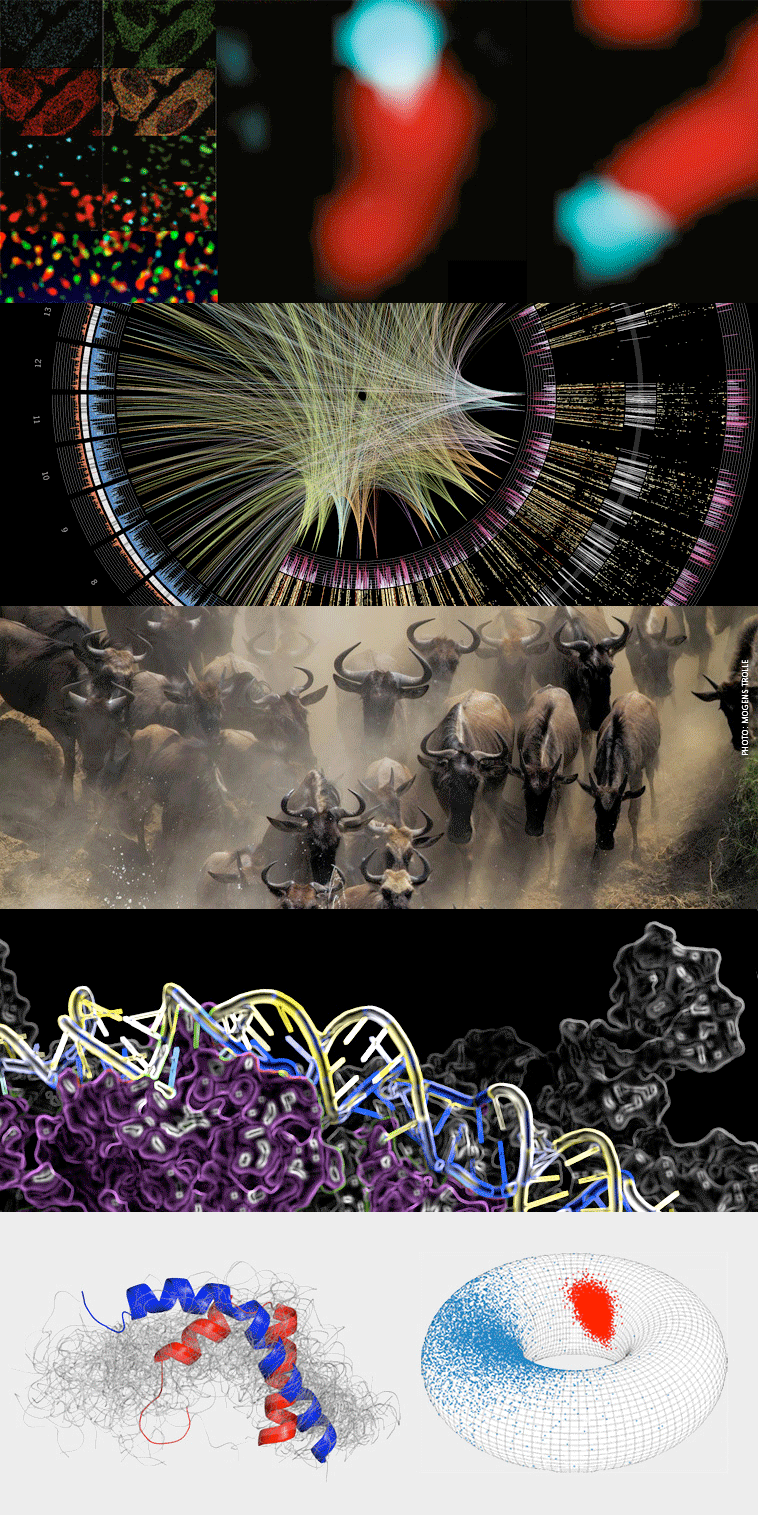
Our thirteen strong research groups work in the fields of RNA biology, bioinformatics, computational biology, machine learning and population and statistical genetics, and our researchers consistently publish their studies in highly recognized international journals. The Section houses the Bioinformatics Centre and has state-of-the-art computational infrastructure and laboratory facilities.
Education
We offer a 3-year Bioinformatics Bachelor program. We also offer a 2-year Bioinformatics Master program to students, who have earned the BSc in Bioinformatics or have a background either in computer science or in molecular biology, biochemistry or biomedicine. Our students acquire thorough theoretical knowledge and hands-on experience in bioinformatics, including sequence analysis, protein and RNA structural analysis, genomics, phylogenetics, analysis of high-throughput big data and machine learning methods. In addition, our faculty provide student projects with a primary focus on bioinformatics.
Values
We strive towards a friendly, collaborative and professional work environment that promotes excellent research and personal development.
 |
Robin Andersson, Associate Professor KU profile page | Personal research page The Andersson lab aims to characterize and better understand the architectures of transcriptional regulation and the fundamental properties of enhancers and promoters. In particular, we focus on enhancer transcription and its association with regulatory activity. We take a genomics approach and use computational and statistical learning techniques to model transcriptional regulation based on large-scale sequencing data. |
 |
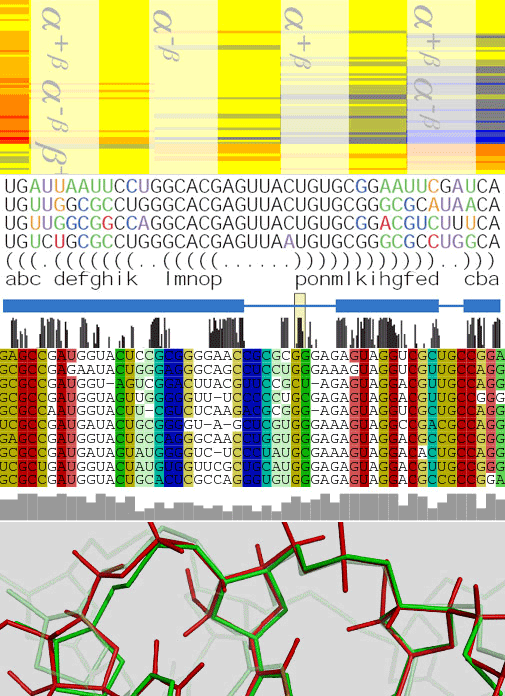
Thomas Hamelryck, Professor KU profile page | Personal research page We are engaged with predicting, designing and determining the 3D structure of RNA and proteins, by developing sophisticated probabilistic models that describe aspects of protein structure. These models are mainly based on machine learning methods (including dynamic Bayesian networks), and directional statistics, the statistics of angles, directions and orientations. |
 |
Robert Krautz, Assistant Professor KU profile page | Personal research page The Tissue Gene Regulation Lab focuses on understanding the gene regulatory roots of tissue development and its dysregulation in the presence of disease-causing genetic variants. For this, we study the gene regulatory mechanisms that define the set of expressed genes in specific cells and thereby the emergence of cell types that assemble into tissues. We built on single cell and genomics techniques applied to organoid cultures and patient-derived biopsies. |
 |
Sarah Rennie, Associate Professor KU profile page | Personal research page My group specialises in: statistical modelling, deep learning and statistical methods development with emphasis on RNA biology, with particular focus on post-transcription gene regulation via RNA modifications and RNA binding proteins. We specialise in devising new analytical approaches covering a broad range of transcriptomic-based next-generation sequencing assays, as well as applying them to answer highly relevant biological questions. |
 |
Albin Sandelin, Professor KU profile page | Personal research page The Sandelin lab is a computation/experimental group with scientists from many fields. We focus on gene regulation, transcriptomics, epigenetics and technological and informatics aspects. With the help of computers, we probe large biological datasets that are generated using novel genomics techniques. One of our strengths is our many collaborations with high-profile experimental laboratories, which supply data to be analyzed. |
 |
Amelie Stein, Associate Professor KU profile page Our lab studies the consequences of sequence variants on proteins, focusing on their cellular stability and function. We perform high-throughput assays on protein variants and build on this data to develop and improve methods for prediction of variant consequences. We then apply these methods to determine whether genomic variants are likely to be pathogenic. Further we aim to integrate effects of multiple mutations for applications in protein engineering. |
 |
Ole Winther, Professor KU profile page | Personal research page We have two focuses: developing machine learning and AI methods and applying them to genomic data in a clinical setting, and biological sequence analysis and medical informatics. The machine learning research is done with the jointly affiliated group at DTU Compute. Clinical genomic research is carried out in collaboration with Genomic Medicine, Rigshospitalet. An example of a current project is deep generative models for analysis of single cell RNAseq data. |
 |
Anders Albrechtsen, Professor KU profile page | Personal research page Our group develops statistical and computational methods for analysis of genomic data including methods for performing multi-loci association studies, methods for detecting and correcting for population stratification, methods for detecting natural selection, loci dependent methods for modeling identity-by-descent and various methods for analysis of second generation sequencing data. |
 |
Rasmus Heller, Associate Professor KU profile page | Personal research page We study evolutionary and population genetics in wild mammals, focusing on ruminants. Our research interests include elucidating how climate, ecosystems and humans have influenced wild mammal populations in Africa, studying adaptive introgression in bovids and exploring how genomic data can be used to aid conservation. We are also involved in a ruminant genome project which aims to understand how ruminants evolved new anatomical structures, and how it has helped them become one of the most successful mammal lineages. |
 |
Ida Moltke, Associate Professor KU profile page | Personal research page We develop and apply statistical methods to genomic data with the purpose of gaining insights into human disease, history and evolution. For instance, by studying DNA from the Greenlandic population we recently identified a genetic variant that explains 10-15% of all cases of type 2 diabetes in Greenland. We have also looked into the migration history of the Artic and are currently investigating how the Greenlanders have genetically adapted the Arctic cold and their very fat-rich diet consisting mainly of seal and fish. |
 |
Hans Siegismund, Associate Professor KU profile page We work on population genetics, phylogeography and speciation processes of large African mammals, mainly bovids and great apes. Another research area includes the study of evolutionary genetics of Foot-and-mouth disease (FMD) virus in East Africa. |
 |
Peter Brodersen, Professor KU profile page | Personal research page Our group studies the mechanisms by which small RNAs regulate gene expression. We use the flowering plant Arabidopsis thaliana as a model system, and make particular use of molecular genetic and biochemical approaches in our work. |
 |
Jan Christiansen, Associate Professor (emeritus) KU profile page | Personal research page We are mainly focusing on post-transcriptional events such as RNA localization, RNA stability, and translational control with an emphasis on the role of cytoplasmic RNA-binding proteins expressed during fetal life and oncogenesis. |
 |
Jeppe Vinther, Associate Professor KU profile page | Personal research page In our group we aim to determine how RNA structure and RNA-protein interactions affect basal cellular processes. This knowledge is important to understand ways of improving the efficiency and specificity of RNA based drugs. |
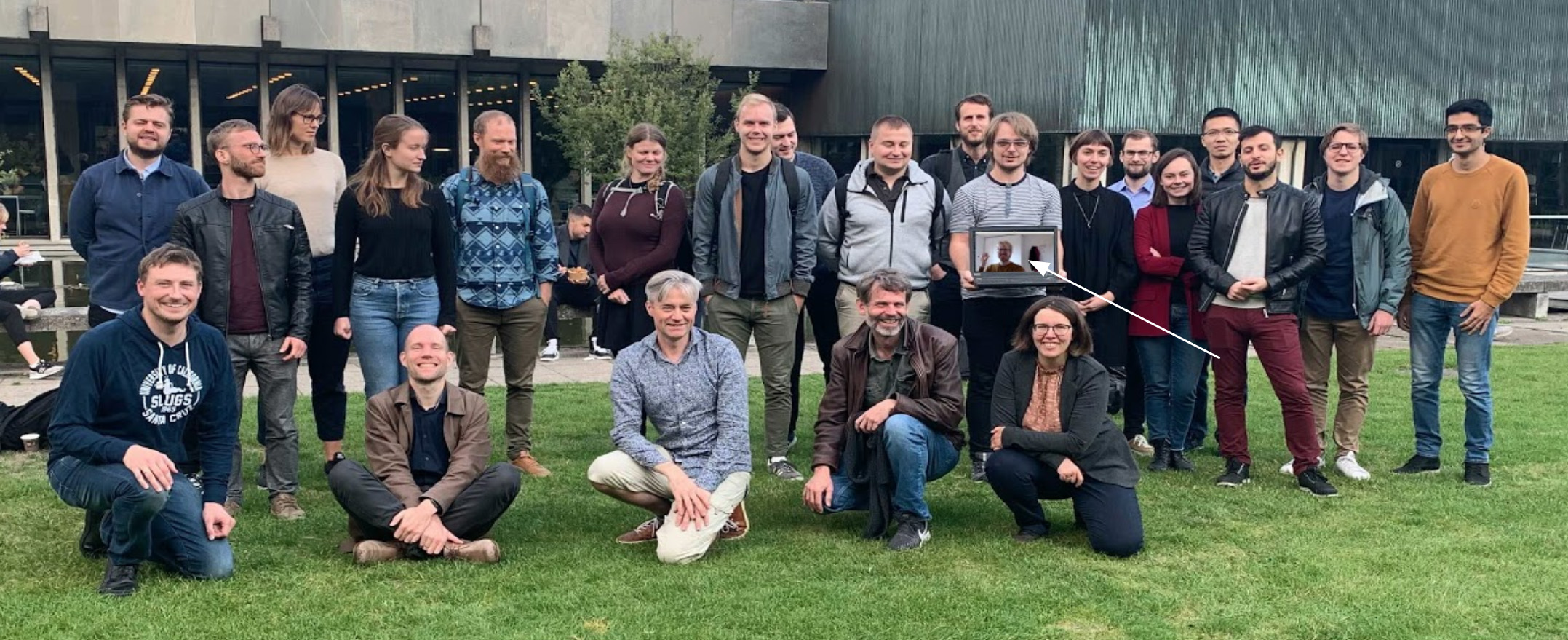
 In 2002, the Faculty of Science at University of Copenhagen recognized the importance of bioinformatics research and education and Professor Anders Krogh was recruited to spearhead the efforts. Under his leadership, and with the generous support from the Novo Nordisk Foundation, the Bioinformatics Centre was founded in 2005 as an independent Centre.
The Centre, which was housed in Section for Computational and RNA Biology at the Department of Biology, employed researchers working on a wide range of topics in bioinformatics and included faculty with shared appointments in the Department of Computer Science.
The Section is now one of the strongest interdisciplinary research environments in Denmark. Over the years, the researchers have made numerous prominent research contributions and continue to produce world-class research results in the bioinformatics field.
Research highlights
Center for Basic Machine Learning Research in Life Science
The Center for Basic Machine Learning in Life Science (MLLS) was established on January 21, 2021 with the generous support of the Novo Nordisk Foundation. We bring together leading machine learning research groups in Denmark to establish a solid foundation for future data science progress in the life sciences.
Artificial intelligence and data science are rapidly changing how science is being conducted. Researchers increasingly rely on a data-centric view, where experimental data is used to discover patterns in data and phrase new scientific hypotheses.
To extract information from data, modern data science techniques often "convert" the raw sensory measurements into abstract data representations, but these representations are often ill-understood and difficult to interpret, which hinders their use for phrasing robust hypotheses. This is particularly true in the life sciences, where data typically is “noisy” and incomplete.
To provide solutions to these problems, we conduct basic research in machine learning that is motivated and informed by fundamental problems in biology and biomedicine.
Read more about MLLS here
Links to relevant free online services, open-access databases and open-source software packages.
| ANGSD ANGSD is a software for analyzing next generation sequencing data. The software can handle a number of different input types from mapped reads to imputed genotype probabilities. Most methods take genotype uncertainty into account instead of basing the analysis on called genotypes. This is especially useful for low and medium depth data. |
| Bayesembler The Bayesembler is a Bayesian method for doing transcriptome assembly from RNA-seq data. |
| BloodSpot BloodSpot is a database that provides gene expression profiles of genes and gene signatures in healthy and malignant hematopoiesis and includes data from both humans and mice. |
| BWA-PSSM BWA-PSSM is a probabilistic short read aligner based on the use of position specific scoring matrices (PSSM). Like many of the existing aligners it is fast and sensitive. Unlike most other aligners, however, it also adaptible in the sense that one can direct the alignment based on known biases within the data set. It is coded as a modification of the original BWA alignment program and shares the genome index structure as well as many of the command line options. |
| JASPAR JASPAR is the leading open-access database of matrix profiles describing the DNA-binding patterns of transcription factors and other proteins interacting with DNA in a sequence-specific manner. |
| Kaiju Kaiju is a program for the taxonomic assignment of high-throughput sequencing reads from whole-genome sequencing of metagenomic DNA. |
| Phobius Phobius is a server for prediction of transmembrane topology and signal peptides from the amino acid sequence of a protein. |
|
Population Genetics relevant software (numerous) |
| Saqqaq Genome Project The primary data from the saqqaq genome project: the sequencing of an Ancient Human Genome, obtained from a permafrost-preserved hair, about 4,000 years old, of a male palaeo-Eskimo of the Saqqaq culture, the earliest known settlers in Greenland. |
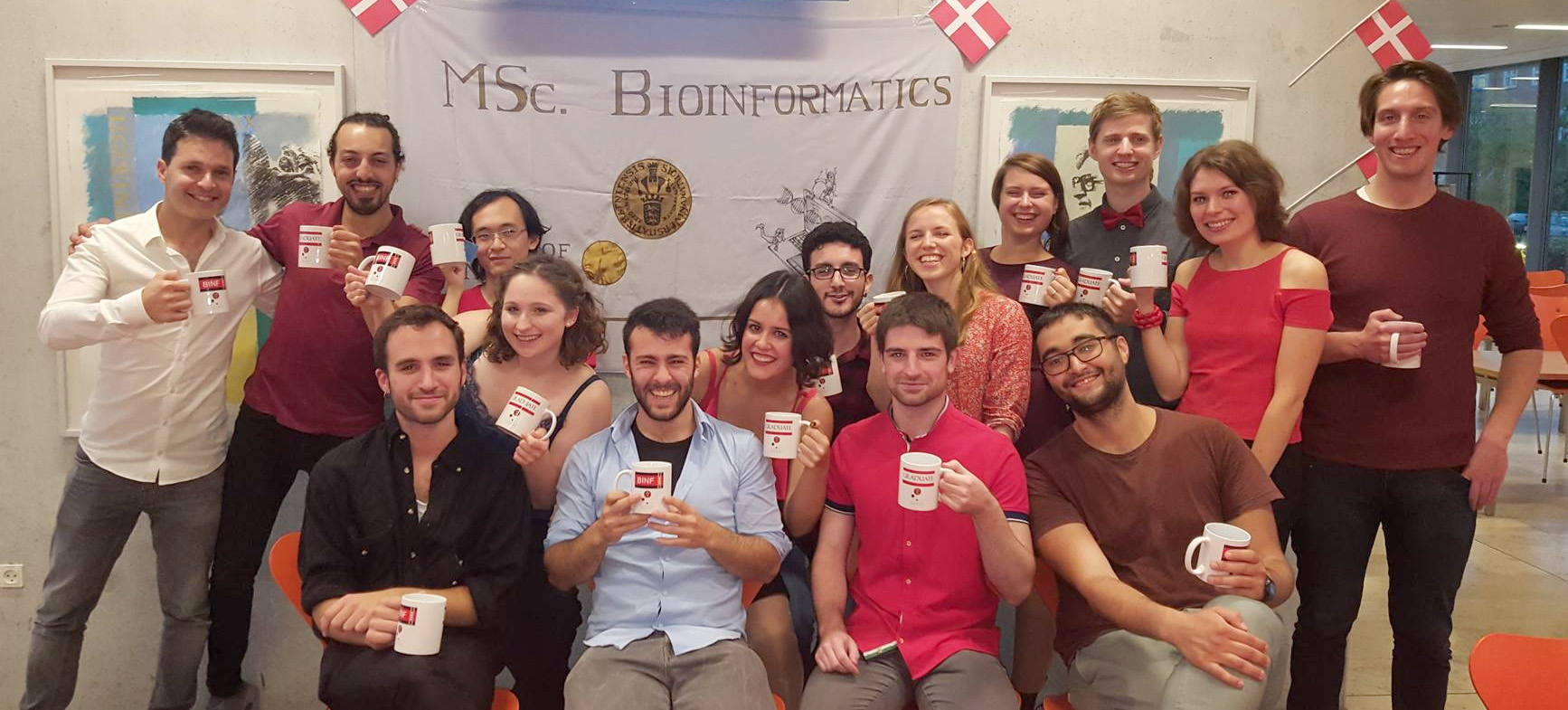
The Section has a long and proud tradition in education of Master's students. The section has recently added a Bioinformatics Bachelor program to bolster student strength, curriculum continuum and graduate excellency. Bachelor's and Master's students are taught by our prominent faculty and, at program completion earn the Bachelor of Science in Bioinformatics and the Master of Science in Bioinformatics, respectively. Two Master's tracks are available: Computational Biology and Computer Science.
- The Computational Biology track is for students who want to add bioinformatics skills to experimental backgrounds in biology, biochemistry and biomedicine
- The Computer Science track is for students who want to apply programming knowledge to innovation and problem-solving in biotechnology and biomedicine or related fields.
In addition, the Section contributes to the education of biology, biochemistry and biomedicine students.
Contact
Section for Computational
and RNA Biology
Ole Maaløes Vej 5
DK-2200 Copenhagen N
SECTION HEAD
Associate Professor Rasmus Heller